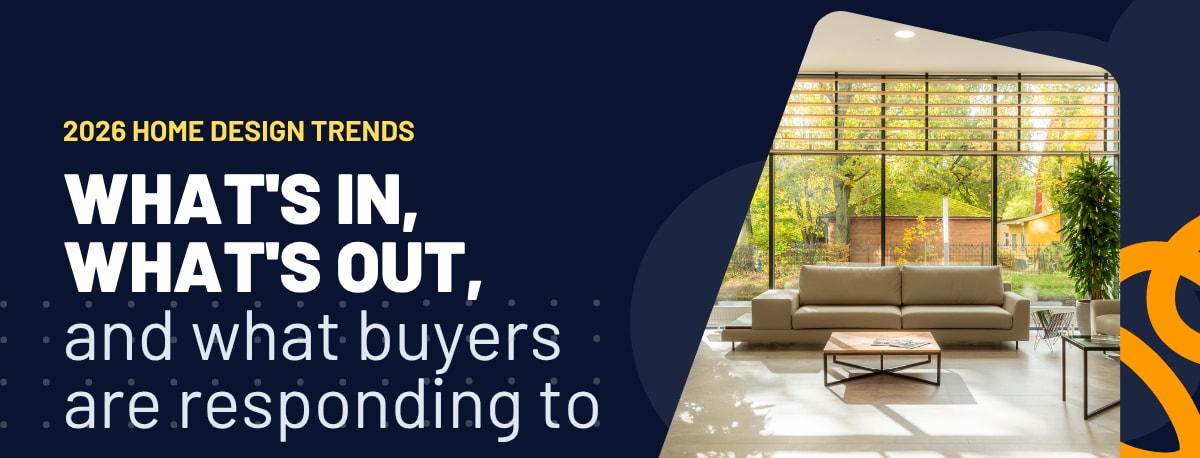
After years of cool grays, crisp whites, and homes that looked more like showrooms than places people live, buyer preferences are shifting.
The new direction is warmer, more personal, and more intentional. Some call it quiet luxury, but in real estate terms, it simply means buyers want homes that feel comfortable, thoughtful, and easy to imagine living in.
That shift is showing up in design reports, buyer surveys, and listing language across the board. For sellers, it matters because the way a home looks and feels can influence how quickly buyers connect with it.
Here is what is in, what is out, and what it means if you are thinking about selling your home.
What’s In
Color Is Back — And It’s Warmer Than You Think
The all-gray interior is no longer the automatic safe choice. Buyers have moved on from spaces that feel cold or overly sterile.
According to Zillow’s 2026 home trends report, listing descriptions mentioning “color drenching” rose 149% year over year. This means that walls, ceilings, and trim are painted in a single rich, immersive color to create depth and mood.
The direction is warm and grounded: soft beige, caramel, terra cotta, sage green, warm ivory, soft navy, and natural earth tones. Designers are also seeing a broader move toward layered warmth and natural texture, as highlighted by Homes & Gardens.
Psychology makes sense. Buyers are looking for homes that feel like sanctuaries, not showrooms.
If you are preparing to sell, that does not mean painting every room a bold color. It means choosing a few strategic updates that help the home photograph better and feel more inviting during showings. A well-chosen paint refresh can change how a space feels almost immediately.
At Amaral & Associates Real Estate, we help sellers identify which design updates are worth making before listing and which ones are better left alone.
Art Deco Details Are Making a Comeback
Buyers are looking for character again. Not cluttering. Not overdone design. Character.
Houzz named Art Deco-inspired details as one of its top 2026 home design predictions. Think arches, curves, scalloped edges, brass accents, jewel tones, chevron patterns, and detailed millwork.
This trend works because it adds personality without overwhelming the home. A curved mirror, updated lighting, rounded furniture, or architectural trim can make a space feel more custom and memorable.
The key is restraint. Buyers want warmth and visual interest, but they still need to picture themselves in the home. One or two strong design moments can make a room stand out without making it feel too personal.
Surfaces and Materials Are Making a Statement
Countertops and backsplashes are no longer expected to disappear into the background quietly.
Natural stone, dramatic veining, full-height backsplashes, plaster, limewash, and textured surfaces are becoming more desirable because they add dimension and depth. Houzz’s 2026 design predictions point to natural stone slabs with soft drama as a key trend.
These materials photograph beautifully, which matters because buyers form opinions before they ever step inside. Texture also helps a home feel warmer and more elevated without relying on flashy finishes.
Layered metals are part of the same shift. Instead of matching every faucet, cabinet pull, and light fixture, buyers are responding to finishes that feel curated. Brushed brass, matte black, nickel, and warm bronze can work together when they feel intentional.
If you already have stone, updated tile, or an interesting texture in your home, those details should be highlighted clearly in your listing photos and description.
The Kitchen Is Getting More Personal
The all-white kitchen is no longer the default. It is not necessarily bad, but buyers are responding more strongly to kitchens that are warm, contrasty, and personal.
Fixr’s 2026 Kitchen Design Trends Report points to guided personalization as one of the biggest themes in kitchen design. Warm neutrals, wood tones, flat-panel cabinetry, statement lighting, and natural materials are all becoming more important.
The NKBA 2026 Kitchen Trends Report also emphasizes lighting, function, and quality materials as major kitchen priorities.
For sellers, the takeaway is not that every kitchen needs a full renovation. In many cases, smaller updates can go a long way: updated cabinet hardware, modern lighting, a warm wall color, new backsplash tile, or better staging.
Buyers want a kitchen that feels considered. Not generic. Not overly trendy. Just thoughtful, warm, and functional.
Open Concept Has Grown Up
Open floor plans are not going away, but buyers no longer want one large, undefined space.
The newer preference is for flow with purpose. Buyers like a connection between the kitchen, dining, and living areas, but they also want rooms that serve clear functions. The rise of remote work has made this even more important.
The Better Homes & Gardens Real Estate 2026 Design Trends Moving Real Estate report found that 86% of buyers say flexible layouts help them look beyond square footage. That is a major shift.
Dedicated offices, reading nooks, defined dining areas, and multipurpose rooms all have value when they are presented correctly.
If you have a separate dining room, home office, or flex space, do not treat it like a drawback. Stage it with purpose. Buyers want to understand how the space can work for daily life.
Homes That Feel Good Are Winning
One of the biggest shifts in buyer behavior is the rise of wellness design.
This does not mean every home needs a luxury spa bathroom or meditation room. It means buyers are paying attention to how a home feels. Does it feel calm? Bright? Restful? Easy to live in?
Zillow’s 2026 trend report notes that wellness-related listing language is on the rise, including spa-inspired bathrooms and spaces designed for relaxation. Fixr’s 2026 Bathroom Design Trends Report also shows a move toward warm tones, natural light, and spa-like comfort.
Biophilic design also plays into this: natural light, organic materials, plants, views of the outdoors, and soft textures. These features help buyers emotionally connect with a property.
This is where staging matters. A simple reading corner, softened lighting, fresh towels in the bathroom, or a few natural elements can help buyers feel the lifestyle a home offers.
At Amaral & Associates Real Estate, we look beyond square footage and features. We help sellers think through how buyers will emotionally experience the home from the first photo to the final showing.
Resilient and Efficient Homes Are Standing Out
Energy efficiency and resilience are becoming major buyer priorities.
According to Zillow’s 2026 home trends report, features such as zero-energy-ready homes, whole-home batteries, EV charging, flood protection, and fire-resistant landscaping appear more often in listings.
Buyers are thinking about utility costs, insurability, and long-term risk. Energy-efficient HVAC systems, updated windows, solar readiness, battery systems, and EV chargers are no longer just nice extras. They can directly influence how buyers view long-term affordability.
If your home has any of these features, they should be clearly documented. Sellers sometimes forget to mention updates that buyers would absolutely care about.
This is where the right listing strategy matters. A feature only helps if buyers know it exists.
What’s Out
Design trends are not just about what to add. They also tell sellers what may need to be softened, updated, or repositioned before listing.
All-Gray Everything
Cool gray interiors have dominated for years, but they now often read as dated or cold. Buyers are leaning toward warmer neutrals, natural materials, and spaces that feel more lived-in.
A full repaint is not always necessary, but warming up key rooms can make a home feel more current.
Overdone Farmhouse Style
The farmhouse look is not completely gone, but the overly themed version has peaked. Barn doors everywhere, decorative shiplap, and overly rustic details can feel tired if they are not authentic to the home.
What buyers respond to now is warmth, texture, and real materials.
Themed Bonus Rooms
Rooms with only one specific use, such as a man cave, wine room, or dedicated theater, can limit buyer imagination.
Buyers want flexibility. If a space can serve as an office, guest room, playroom, workout area, or hobby room, stage it to show its versatility.
Two-Story Foyers
Two-story foyers can create drama, but they also come with trade-offs. The National Association of Home Builders has reported that many buyers are less enthusiastic about two-story foyers because of energy inefficiency, heat imbalance, and lost usable square footage.
If your home has one, the goal is to soften the space with lighting, scale, and warmth so it feels welcoming rather than empty.
Matched-Finish Everything
Matching every faucet, fixture, and cabinet pull to the same metal finish can feel dated. Buyers are responding more to layered finishes that look collected and intentional.
The key is balance. Mixed metals should feel coordinated, not random.
Open Shelving as the Default
Open shelving can look beautiful in photos, but many buyers see it as high maintenance. It can also make kitchens feel visually busy.
If you have open shelving, keep it minimal, clean, and well-styled before photos and showings.
Safe Greige Tile That Disappears
Neutral still works, but bland does not. Buyers are responding to materials that add texture, contrast, or warmth.
This does not mean every bathroom or kitchen needs dramatic stone. It means surfaces should add to the room rather than fade into the background.
Heavy Maximalism for Resale
Highly personal design can be beautiful to live in, but it can be harder to sell. Buyers need enough visual breathing room to imagine their own furniture, routines, and style in the home.
For resale, the goal is to be restrained.
What to Change — And What to Leave Alone
Not every trend requires a contractor or a major renovation. In fact, some of the most effective updates are cosmetic.
A $500 to $2,000 refresh can often make a noticeable difference. Warm paint, updated lighting, new cabinet hardware, a limewash accent wall, fresh staging, or updated textiles can shift how a home photographs and how it feels in person.
That first impression matters. Most buyers form an opinion before they ever walk through the door. Warm, textured, well-presented spaces tend to photograph better than stark, flat, overly minimal ones.
If you are wondering which updates are worth making before selling, you can start by checking your home’s current market position with our What’s My Home Worth tool. From there, our team at Amaral & Associates Real Estate can help you decide which improvements are likely to matter in your price range, neighborhood, and buyer pool.
Bottom Line
The best-performing homes in 2026 are not necessarily the trendiest. They are homes that feel intentional, warm, functional, and easy for buyers to picture themselves living in.
Buyers are responding to thoughtful color, flexible layouts, efficient systems, natural materials, and spaces that feel good to live in. They are moving away from cold grays, overly themed design, generic finishes, and layouts that do not support real life.
If you are preparing to sell, the goal is not to chase every trend. The goal is to make smart, strategic updates that help your home feel current, photograph well, and connect with today’s buyers.
At Amaral & Associates Real Estate, we help sellers understand which updates are worth making — and which are not. A smart preparation plan can make a real difference in how your home shows, how buyers respond, and how confidently you enter the market. Reach out to our team anytime.